Tag: #MedicaidUSA

  • Medicare vs Medicaid: Key Differences, Benefits & Eligibility in the USA (2026 Guide)

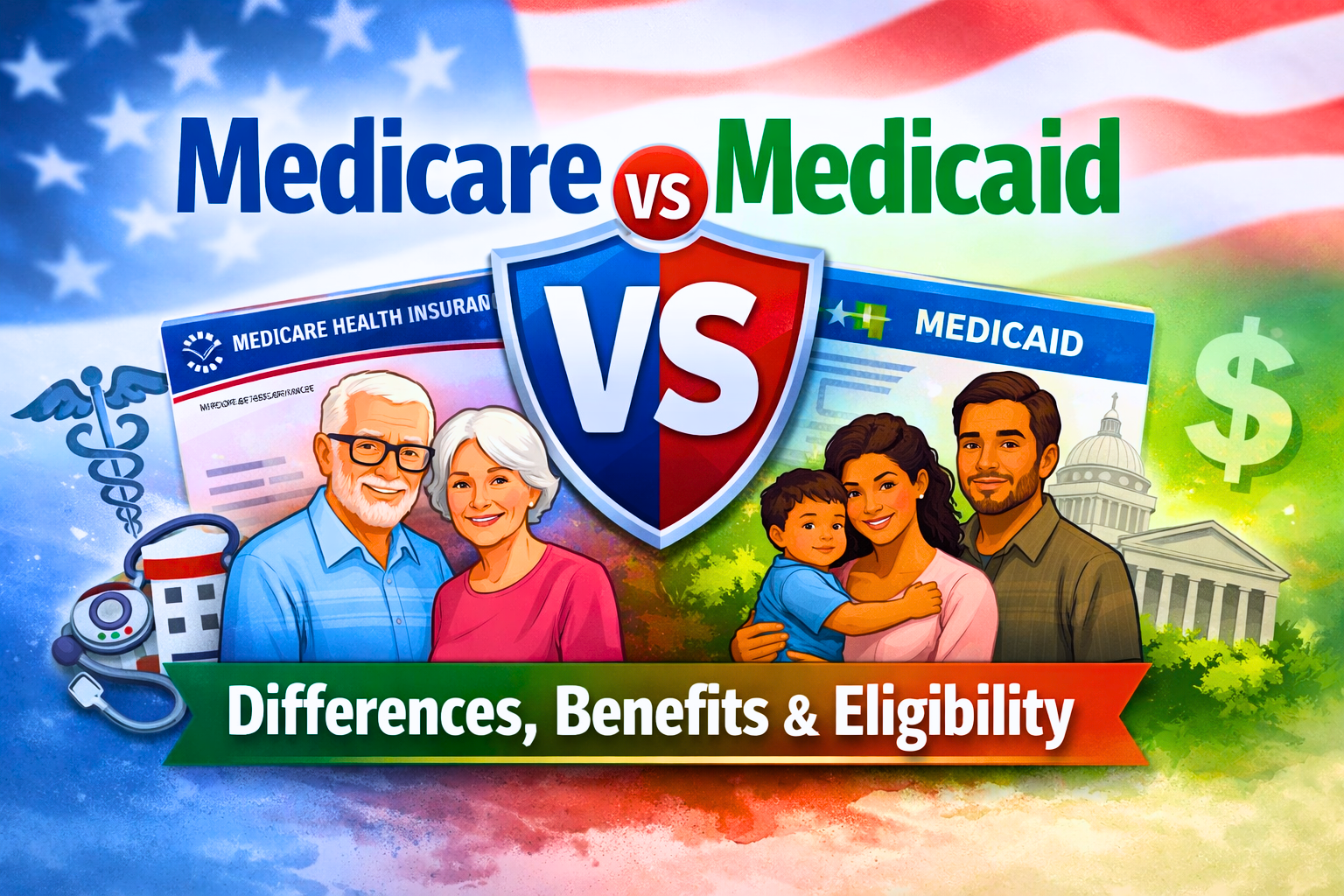
    Medicare vs Medicaid: Key Differences, Benefits & Eligibility in the USA (2026 Guide)


    Understanding the difference between Medicare and Medicaid is crucial for millions of Americans seeking healthcare coverage. These two government-sponsored programs are often confused because they both help people pay for medical care—but they serve different populations, have different eligibility requirements, and offer distinct benefits. In this comprehensive guide, we’ll break down everything you need to know about these programs so you can make informed decisions. (HHS.gov)


    1. What Are Medicare and Medicaid?

    1.1 What Is Medicare?

    Medicare is a federal health insurance program primarily designed to help people aged 65 and older, as well as younger individuals with certain disabilities or specific medical conditions. Because it’s federally operated, Medicare is the same across all states and governed by the Centers for Medicare & Medicaid Services (CMS). (HHS.gov)

    Key features:

    • Federal program
    • Same coverage and rules in every state
    • Beneficiaries typically pay premiums, deductibles, and coinsurance
    • Designed to help individuals as they age or if they have specific disabilities

    👉 Official Medicare Info: https://www.medicare.gov/ (HHS.gov)


    1.2 What Is Medicaid?

    Medicaid is a joint federal and state health coverage program for people with limited income and resources. Unlike Medicare, Medicaid is administrated individually by each state, which means eligibility rules and benefits can vary by location. (HHS.gov)

    Key features:

    • Joint federal & state program
    • Helps low-income individuals and families
    • Benefits and eligibility vary by state
    • Often includes services not covered by Medicare

    👉 Official Medicaid Info: https://www.medicaid.gov/ (HHS.gov)


    2. Medicare vs Medicaid: Key Differences

    Here’s a side-by-side look at the main areas of difference between Medicare and Medicaid:

    FeatureMedicareMedicaid
    PurposeFederal health insuranceHealth coverage for low-income individuals
    Who It ServesAge 65+ & some disabled individualsPeople of all ages with limited income
    Who Runs ItFederal governmentFederal & state partnership
    Eligibility BasisAge, disability, specific conditionsIncome, household size, other factors
    Coverage LimitsStandardized nationwideVaries by state
    CostsPremiums, deductibles, coinsuranceUsually free or low cost

    3. Eligibility Requirements

    3.1 Medicare Eligibility

    Most people become eligible for Medicare at age 65. You can qualify earlier if you:

    • Have received Social Security Disability Insurance (SSDI) for at least 24 months
    • Have End-Stage Renal Disease (ESRD)
    • Have Amyotrophic Lateral Sclerosis (ALS)

    There are no income limits for Medicare eligibility. (HHS.gov)


    3.2 Medicaid Eligibility

    Medicaid is primarily based on income and financial need. Eligibility is influenced by:

    • Household income compared to the federal poverty level (FPL)
    • Family size
    • State-specific rules (some allow coverage for adults without children; others do not)

    Many states expanded Medicaid under the Affordable Care Act (ACA), allowing adults with incomes up to ~138% of the FPL to qualify. (Healthline)


    4. What Benefits Are Covered?

    4.1 Medicare Benefits

    Medicare consists of multiple parts, each covering different services:

    • Part A: Hospital insurance
    • Part B: Medical services and outpatient care
    • Part C (Medicare Advantage): Optional plans with additional benefits
    • Part D: Prescription drug coverage

    Medicare covers inpatient and outpatient care, preventive services, and more, but generally doesn’t cover long-term care, routine dental, vision, or hearing. (HHS.gov)

    👉 Learn more about Medicare Parts: https://www.medicare.gov/basics/costs/what-part-a-part-b-part-c-and-part-d-cover (HHS.gov)


    4.2 Medicaid Benefits

    Medicaid covers essential health services and often offers additional benefits not typically covered by Medicare, such as:

    • Long-term nursing home care and home-based services
    • Dental and vision services
    • Transportation to medical appointments
    • Prenatal and maternity care

    Since states administer their own programs, coverage can vary widely between states. (Medicare)

    👉 Explore Medicaid benefits: https://www.medicaid.gov/medicaid/benefits/index.html (HHS.gov)


    5. Costs and Payment Differences

    5.1 Medicare Costs

    Medicare beneficiaries usually pay:

    • Monthly premiums (especially Part B & Part D)
    • Deductibles
    • Coinsurance or copayments

    While Part A is often premium-free if you’ve paid Medicare taxes long enough, other parts have cost-sharing responsibilities. (NerdWallet)


    5.2 Medicaid Costs

    Medicaid is designed to be low-cost or free for eligible participants. Most people don’t pay premiums, and out-of-pocket costs are usually minimal. In many states, total cost sharing cannot exceed 5% of a household’s income in a year. (Healthline)


    6. Dual Eligibility: Getting Both Medicare and Medicaid

    Some low-income individuals can qualify for both programs—this is called being “dual eligible.” In such cases:

    • Medicare pays first for covered services
    • Medicaid helps cover out-of-pocket costs, such as premiums, deductibles, coinsurance, and services Medicare doesn’t cover (like long-term care) (GovFacts)

    This coordinated coverage helps reduce healthcare costs for beneficiaries who qualify for both programs.


    7. How to Apply

    7.1 Applying for Medicare

    You can apply for Medicare:

    • Automatically through Social Security when you turn 65
    • Through the Social Security Administration (SSA) online, by phone, or in person

    Find detailed steps on the official site:
    👉 https://www.ssa.gov/medicare/ (HHS.gov)


    7.2 Applying for Medicaid

    Medicaid applications vary by state. You can:

    • Apply through your state’s Medicaid agency
    • Use the federal health insurance marketplace at Healthcare.gov

    State application links & information:
    👉 https://www.medicaid.gov/medicaid/apply/index.html (HHS.gov)


    8. FAQs (Frequently Asked Questions)

    Q1: Can I lose Medicaid if I get Medicare?
    A: No, but your coverage may change. In many cases, Medicaid will help pay Medicare’s out-of-pocket costs if you remain eligible for both. (GovFacts)

    Q2: Is Medicare better than Medicaid?
    A: “Better” depends on your situation. Medicare provides nationwide standardized coverage for seniors and certain disabled people, while Medicaid offers broader services for low-income individuals and families. (NerdWallet)

    Q3: Does Medicare cover long-term care?
    A: Typically, no. Long-term care is generally covered by Medicaid, not Medicare. (HHS.gov)


    9. Conclusion

    Both Medicare and Medicaid are vital to the U.S. healthcare system—but they serve different purposes:

    • Medicare helps older adults and certain disabled individuals access care.
    • Medicaid supports low-income households with broader benefits.

    Understanding how each program works can significantly impact your healthcare decisions, especially as you age or if you have limited income.

    For the most accurate information, always refer to the official government resources listed in this article.


    Cheap Health Insurance in USA for Low Income Families (2026 Guide)

  • Cheap Health Insurance in USA for Low Income Families (2026 Guide)

    Cheap Health Insurance in USA for Low Income Families (2026 Guide)


    💡 Cheap Health Insurance in the USA for Low-Income Families

    Health insurance is one of the most important financial protections a family in the United States can have. But for low-income families—especially those without employer coverage—the cost of health care and monthly premiums can feel overwhelming. Thankfully, there are multiple affordable and even free health insurance options available to help low-income individuals and families stay healthy without breaking the bank.

    This guide explains cheap health insurance options, eligibility requirements, cost savings strategies, and how to apply—all tailored to people with limited income who want accessible care in the USA.


    📌 What You’ll Learn in This Article

    • Why health insurance matters for low-income families
    • Government programs that provide free or low-cost coverage
    • How the Affordable Care Act (ACA) helps lower costs
    • Ways to reduce monthly premiums & out-of-pocket expenses
    • Step-by-step application tips
    • Resources, links, and FAQs

    Let’s dive in!


    🏥 Why Health Insurance Matters

    Health insurance isn’t just about doctor visits or prescriptions—it protects families from financial ruin due to unexpected illness or injury.

    Without coverage:

    • Emergency hospital bills can reach tens of thousands of dollars
    • Chronic conditions (like diabetes or high blood pressure) go untreated
    • Preventive care is delayed or skipped
    • Families face medical debt and lowered quality of life

    For low-income households, these risks are higher, especially if a serious health issue strikes. Health insurance helps spread financial risk, getting you the care you need when you need it.


    🧑‍👩‍👧‍👦 Main Cheap Insurance Options for Low-Income Families

    ✅ 1. Medicaid – Free or Very Low-Cost Coverage

    Medicaid is a federal and state health insurance program for low-income individuals, families, children, pregnant women, people with disabilities, and seniors.

    👉 It provides comprehensive coverage, often with no monthly premium and minimal out-of-pocket costs.

    💡 How It Works
    Medicaid eligibility is based primarily on household income and family size and varies by state. Some states have expanded Medicaid to cover more adults, while others have stricter rules. (HealthCare.gov)

    📌 Eligibility Tip
    Even if you think you may not qualify, you should still apply—your state may have options you don’t know about. (HealthCare.gov)

    👉 Apply directly at your state’s Medicaid agency or through the Marketplace at HealthCare.gov.

    📍 More Info:
    🔗 Learn about Medicaid & CHIP eligibilityhttps://www.healthcare.gov/medicaid-chip/getting-medicaid-chip/ (HealthCare.gov)


    🧒 2. Children’s Health Insurance Program (CHIP)

    If your income is too high for Medicaid but still limited, CHIP can help cover children under age 19.

    ✔ It offers affordable or free health insurance
    ✔ Includes doctor visits, prescriptions, dental, vision, and more

    CHIP is run by states and gives priority to families who earn too much for Medicaid but can’t afford typical private plans. (HHS)

    📍 Learn More: https://www.insurekidsnow.gov/


    🏛 3. Affordable Care Act (ACA) Marketplace Plans

    For families that don’t qualify for Medicaid or CHIP, the ACA Health Insurance Marketplace provides subsidized private health plans.

    🔎 What Are ACA Subsidies?

    The government offers premium tax credits to lower the cost of Marketplace health plans. These credits reduce how much you pay each month for coverage.

    ✔ Eligibility depends on income and household size. (KFF)
    ✔ Most people earning up to 400% of the Federal Poverty Level (FPL) can qualify for subsidies. (Insurance.com)
    ✔ Some states expanded Medicaid, which affects eligibility thresholds.

    ⚠ However, as of 2026, enhanced ACA subsidies from previous years have expired, meaning premiums are rising and tax credits are less generous than they were in prior years. This change may increase costs for many low-income families. (AP News)

    💡 Subsidies help ensure you never pay a certain percentage of your income toward premiums—but exact savings depend on income and family size.

    📍 Apply for Marketplace coverage:
    🔗 https://www.healthcare.gov/


    🩺 4. Catastrophic Plans & Other Options

    If you’re under 30 or qualify for a hardship exemption, you might be eligible for a catastrophic health plan, which has:

    • Low monthly premiums
    • High deductibles
    • Coverage for emergency and serious care

    These plans can be a temporary safety net, though they don’t cover as much routine care.


    🧠 Quick Comparison: Low-Income Health Insurance Options

    PlanBest ForCostKey Benefits
    MedicaidVery low incomeFree or very lowComprehensive care, low costs
    CHIPChildrenLow to freeIncludes dental & vision
    ACA Marketplace + SubsidiesLow-to-moderate incomeVaries after subsidyChoice of plans
    Catastrophic PlansUnder 30/ hardshipLow premiumsEmergency coverage

    💸 How to Save Money on Health Insurance

    Even after you choose a plan, there are ways to reduce costs further:

    1. Estimate Income Carefully

    Your subsidy amount is based on your projected annual income. Be accurate to avoid owing money later.

    2. Choose the Right Metal Level

    Marketplace plans come in Bronze, Silver, Gold, and Platinum tiers:

    • Bronze = lowest premiums, highest out-of-pocket
    • Silver = moderate premiums + cost-sharing reductions if eligible
    • Gold/Platinum = higher premiums, lower costs at care time

    3. Check for Cost-Sharing Reductions

    If your income qualifies, you can get lower deductibles and copayments—but you must enroll in a Silver plan. (KFF)

    4. Use Preventive Services

    Most insurance plans must cover preventive care for free, such as vaccines and annual exams.

    5. Consider Local Assistance

    Health insurance navigators and community clinics can help you apply and choose the right plan.


    📝 Step-by-Step Application Guide

    Follow these simple steps to apply for health insurance if you’re a low-income family:

    Step 1: Gather Information

    You’ll need:

    • Social Security numbers (or immigration numbers)
    • Income information (recent pay stubs or tax return)
    • Household size and address

    Step 2: Check Eligibility Before Applying

    Depending on your income:

    ✅ You may qualify for Medicaid
    ✅ You may qualify for CHIP
    ✅ You may get subsidized ACA coverage

    Step 3: Apply Through the Marketplace or State Medicaid Office

    • Visit HealthCare.gov and fill out a Marketplace application
    • Your application will show if you qualify for Medicaid, CHIP, or Marketplace subsidies

    Step 4: Compare Plans

    Look at:

    • Monthly premium
    • Deductible
    • Doctor network
    • Prescription coverage

    Step 5: Enroll!

    Enroll during the Open Enrollment Period (usually each fall, but special enrollment may apply after life changes like marriage, birth, job loss, etc.).


    🧾 Important Resources & Useful Links


    ❗ FAQs About Cheap Health Insurance

    ❓ Can I get free health insurance?

    Yes — if you qualify for Medicaid or CHIP, you may pay nothing or very little.

    ❓ What if my income is too low for ACA subsidies?

    If your state didn’t expand Medicaid and your income is extremely limited, you might fall into the Medicaid gap. If so, you should still try Medicaid and other community programs. (KFF)

    ❓ What if I can’t afford the premium even with subsidies?

    Consider:

    • Changing to a lower-cost plan
    • Using free clinics
    • Seeking help from navigators or licensed agents

    🧠 Final Thoughts

    Affordable health insurance for low-income families does exist in the USA—but it can be complex to navigate. Government programs like Medicaid and CHIP, along with ACA subsidies, are designed to make health coverage accessible and sustainable.

    With the recent expiration of enhanced premium subsidies, it’s more important than ever to apply early, know your options, and choose smartly so you don’t miss valuable savings. (AP News)

    If you’re looking to protect your family’s health and finances, start your application today—you might qualify for free or affordable coverage without even knowing it!


    Car Insurance in the USA: Complete Guide (2026)


    cheap-health-insurance-usa-low-income-families