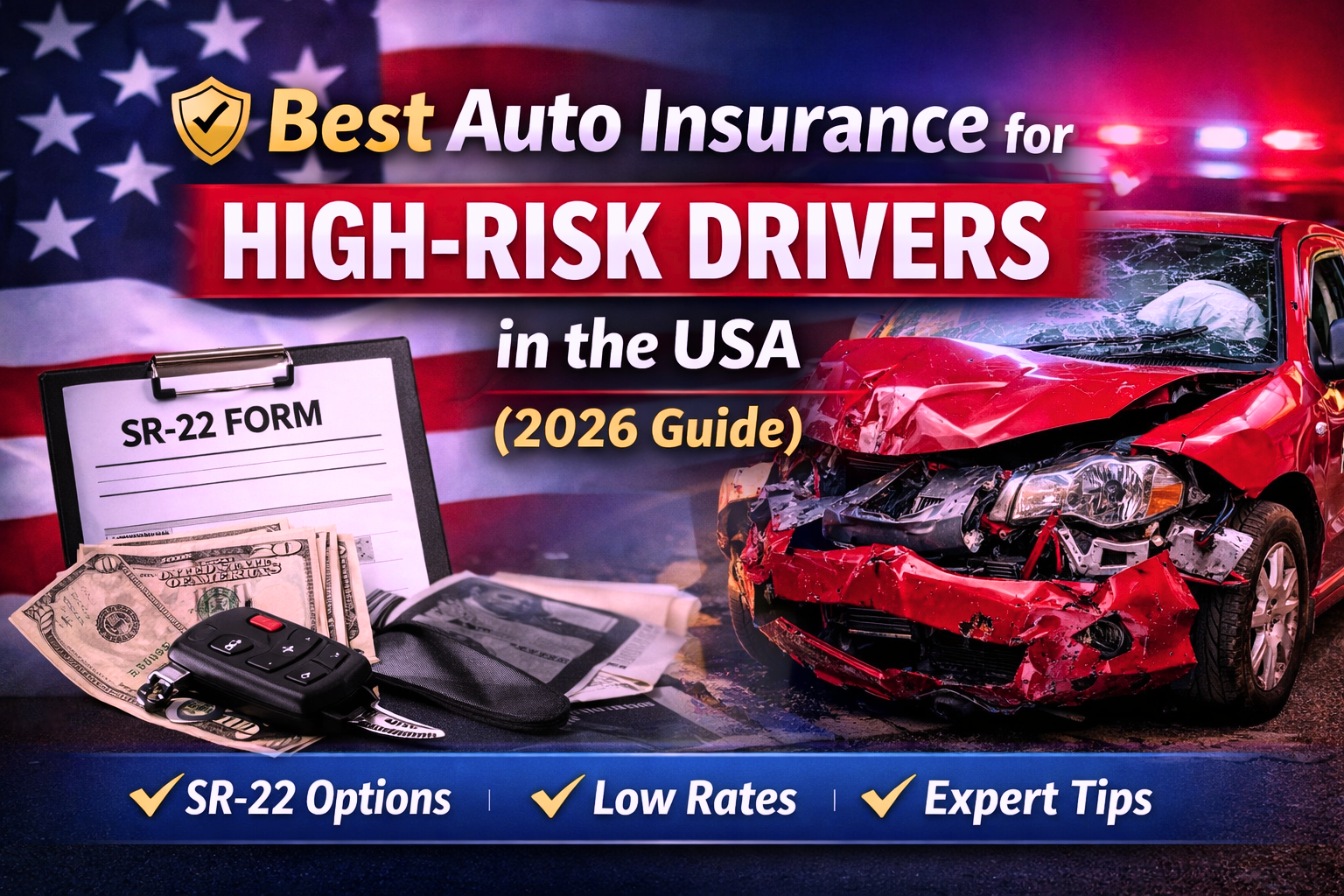
If you’re labeled a high-risk driver, finding affordable and reliable auto insurance may feel overwhelming. High-risk status often comes with steeper premiums, limited coverage options, and long search sessions — but it doesn’t have to be impossible. This comprehensive guide will help you understand what high-risk auto insurance is, how rates are calculated, top companies to consider, and practical tips for lowering your costs.
✔️ Written in clear, engaging English
✔️ Optimized for SEO and Google rankings
✔️ Includes useful data, tips, and links for deeper research
Table of Contents
- What Is High-Risk Auto Insurance?
- Why High-Risk Drivers Pay More
- Top Auto Insurance Companies for High-Risk Drivers in the USA
- What to Look For in a High-Risk Policy
- How Much Does High-Risk Auto Insurance Cost?
- Tips to Lower Your Insurance Premiums
- Frequently Asked Questions (FAQs)
- Final Thoughts
🧠 What Is High-Risk Auto Insurance?
High-risk auto insurance refers to policies designed for drivers who are statistically more likely to file claims due to past driving behavior or personal risk factors. Drivers become “high risk” because of things like:
- Multiple at-fault accidents
- Speeding tickets or traffic violations
- DUI/DWI convictions
- Poor credit history
- Driving without insurance or lapses in coverage
These factors influence how insurance companies view your risk, and as a result, you may face higher premiums or limited options. (wallethub.com)
📊 Why High-Risk Drivers Pay More
Insurance rates aren’t arbitrary. Companies use complex formulas that take into account:
🔍 1. Driving Record
A history of violations, accidents, or DUI convictions is a primary reason for higher premiums. Past behavior signals to insurers that a driver might file claims in the future.
📈 2. Credit Score (in Most States)
In many U.S. states, insurers are allowed to use credit scores to help calculate auto insurance premiums — and a lower credit score often means higher rates.
🚗 3. Vehicle Type
Expensive cars or those with high theft rates cost more to repair or replace, which can raise premiums for high-risk drivers.
🎓 4. Age and Experience
Teen drivers and seniors often pay more due to statistically higher claim rates.
🧑💼 5. Lack of Continuous Coverage
Gaps in coverage, like letting insurance lapse, can raise your rate. (wallethub.com)
Understanding these factors will help you plan better and improve your insurance profile over time.
🏆 Top Auto Insurance Companies for High-Risk Drivers in the USA
Here’s a list of insurance companies that frequently offer competitive rates and policies for high-risk drivers in 2026.
1. GEICO 🇺🇸
- Known for competitive rates, even for drivers with violations
- Assists with SR-22/FR-44 filings, which are forms some states require if your license was suspended
- Offers a variety of discounts to help reduce costs
- Available in all 50 states (Bankrate)
2. State Farm 🇺🇸
- Often rated very affordable overall, especially with defensive driving programs
- A++ AM Best financial strength (very stable)
- Good choice for drivers with tickets or minor accidents
- Discounts available for safe driving and bundled policies (MoneyGeek.com)
3. Progressive 🇺🇸
- Great option for drivers with DUI history or frequent violations
- Offers accident forgiveness and vanishing deductibles in many states
- Flexible coverage options to fit different needs
- Known for a strong online quote tool (Forbes)
4. Nationwide 🇺🇸
- Strong for drivers with bad credit histories
- Offers perks like accident forgiveness, gap insurance, and vanishing deductibles
- Has fairly low complaint levels
- Good for teen and senior drivers considered high risk (Forbes)
5. USAA 🇺🇸 (Military & Family Only)
- Exceptional for military members, veterans, and their families
- Outstanding rates even for high-risk drivers
- Highly rated claims service and satisfaction scores
- NOT available to the general public — eligibility rules apply (Forbes)
Other Insurers to Consider
- Travelers – strong coverage options and affordable plans (MoneyGeek.com)
- The General – known for nonstandard policies that accept higher risk profiles (NerdWallet)
- Dairyland – caters to drivers with poorer records (NerdWallet)
📌 What to Look For in a High-Risk Auto Insurance Policy
Choosing the right policy isn’t just about price — it’s also about representation and protection.
⚖️ 1. Minimum Legal Requirements
Every state has minimum liability coverage required to legally drive. These include:
- Bodily injury liability
- Property damage liability
Make sure your policy meets your state’s requirements before anything else.
🚘 2. Full Coverage vs. Liability Only
- Liability Only is cheaper but doesn’t cover damage to your own vehicle
- Full Coverage includes collision and comprehensive protection (recommended if your car is newer or financed)
High-risk drivers are more likely to file claims, so full coverage can be wise, despite higher premiums. (wallethub.com)
🧠 3. Discounts
Ask about:
✔ Good driver discounts (even for future safe behavior)
✔ Defensive driving courses
✔ Multi-policy discounts
✔ Paid-in-full discounts
These can significantly lower your rate. (The Wall Street Journal)
🛠️ 4. Customer Service & Claims Handling
An insurer’s speed and fairness in handling claims is critical — many high-risk drivers rely on solid service when filing incidents.
You can check consumer satisfaction via sources like the J.D. Power Auto Insurance Study or NAIC complaint ratios for insights.
💰 How Much Does High-Risk Auto Insurance Cost?
Insurance premiums vary widely based on state, driving history, age, vehicle, and other factors. However, here’s what recent data shows for high-risk drivers:
- A driver with a DUI or accident often pays significantly more than average
- High-risk premiums can be 38% higher than rates for clean drivers (Compare.com)
- Rates can range from around $1,400 to $3,000+ per year depending on company and driver profile (AutoInsurance.com)
This is just a benchmark — your actual quotes will vary. Always get multiple quotes!
📉 10 Effective Tips to Lower Your High-Risk Insurance Premium
Even if you’re labeled high-risk, there ARE ways to reduce your premium:
1. Shop Around Often
Getting quotes from at least 3–5 insurers increases your chances of finding a better deal. (The Wall Street Journal)
2. Improve Your Driving Habits
As time passes with no new violations or accidents, insurers may reward you with lower rates.
3. Take a Defensive Driving Course
Many companies offer discounts for completing approved safety courses. (The Wall Street Journal)
4. Increase Your Deductible
A higher deductible lowers your premium — but be sure you can afford it if you need it. (The Wall Street Journal)
5. Bundle Policies
Insuring your home, renters, or other vehicles with the same company can secure discounts. (The Wall Street Journal)
6. Keep Continuous Coverage
Avoid gaps in coverage — lapses signal high risk to insurers. (wallethub.com)
7. Drive a Safer or Less Valuable Vehicle
Insurance costs less for cars with good safety ratings and lower repair costs.
8. Ask for Usage-Based Programs
Some insurers offer programs that reward safer driving over time.
9. Maintain Good Credit (Where Allowed)
In states that permit credit-based pricing, better credit scores can lower your rate.
10. Work With an Independent Agent
Independent agents can compare dozens of companies on your behalf — especially helpful for high-risk profiles.
❓ Frequently Asked Questions (FAQs)
🧾 What Is an SR-22?
An SR-22 (or FR-44 in some states) is a document your insurer files with the state proving you meet minimum insurance requirements after serious violations like DUI.
🚗 Can I Get Insurance If I Was Denied?
Yes — you can try:
✔ Other insurers
✔ Non-standard markets
✔ State assigned-risk plans (most expensive) (Forbes)
🕐 How Long Am I Considered High Risk?
Typically 3–5 years, depending on the severity of violations. With clean driving, you can improve your risk profile sooner.
🧠 Final Thoughts
High-risk auto insurance doesn’t have to be a dead end — though it is costly and frustrating at times. With strategic shopping, smart decisions, and good policy evaluation, you can still score a policy that protects you without draining your wallet.
📌 Useful Resources
- ⚖️ Federal Insurance Information Institute — Auto Insurance Overview
- 📊 J.D. Power — Auto Insurance Satisfaction Studies
- 🏛️ Your State DMV — Insurance Requirements & SR-22 Information
Pet Insurance Kya Hai? Benefits & Best Companies in USA (2026 Guide)
Leave a Reply